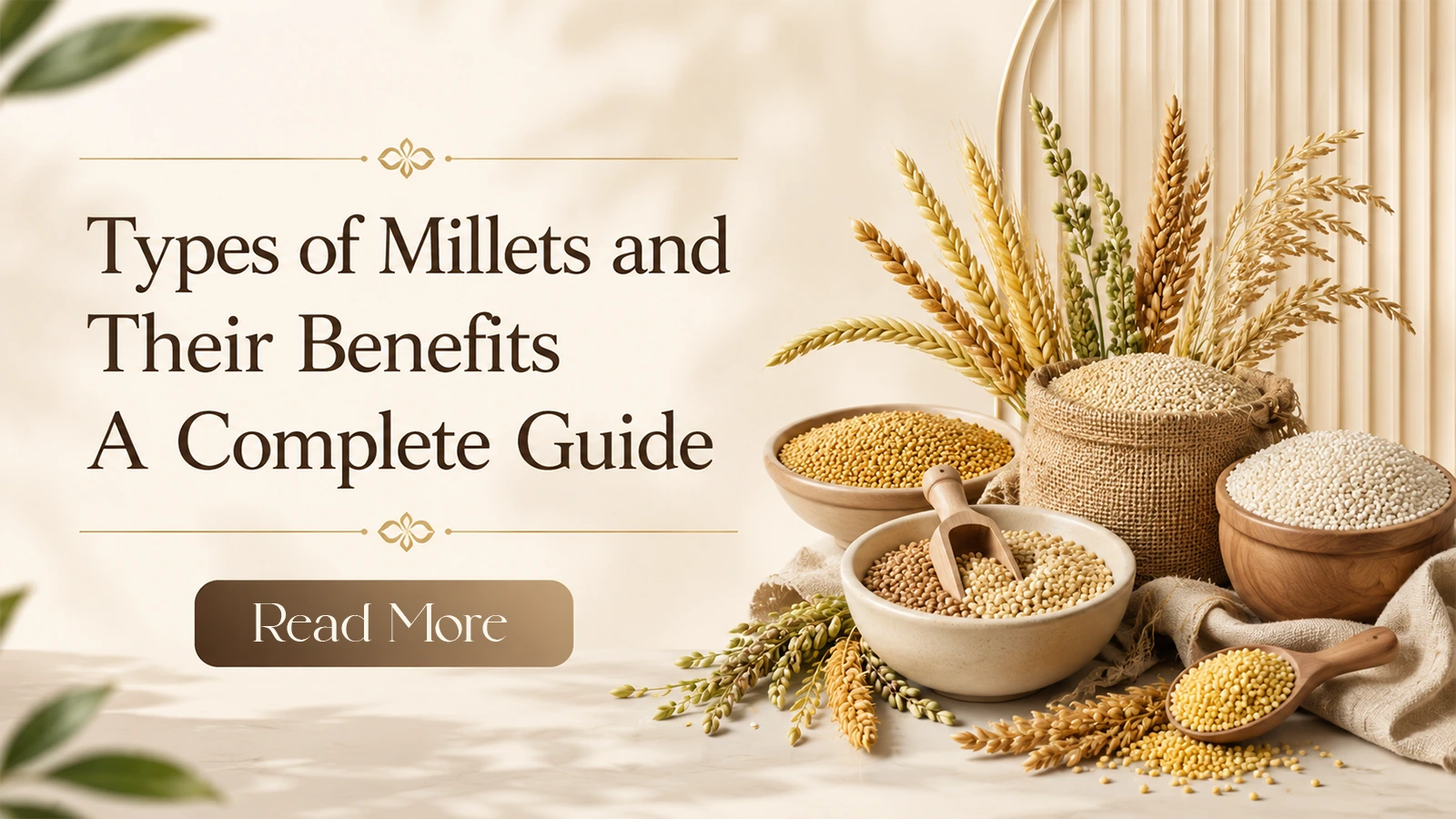
For generations, millets have been an important part of traditional diets across India and other regions of Asia and Africa. Today, these small grains are gaining renewed attention as people look for nutritious, versatile and less-refined alternatives to conventional grains.
Millets are a diverse group of small-grained cereals that includes Ragi, Jowar, Bajra, Kodo Millet, Foxtail Millet, Little Millet, Proso Millet and Browntop Millet. According to the Food and Agriculture Organization (FAO), whole millets can provide dietary fibre, minerals, vitamins and protein, with nutritional composition varying between millet varieties.
So, why should you add millets to your diet?
Let’s explore 10 practical reasons.
1. Millets Are Nutrient-Rich Whole Grains
One of the biggest reasons to include millets in your meals is their nutritional diversity.
Different millet varieties provide different amounts of:
- Dietary fibre
- Protein
- Iron
- Magnesium
- Phosphorus
- Zinc
- Copper
- B vitamins
For example, FAO data shows that pearl millet provides dietary fibre, protein, iron, magnesium, phosphorus and zinc, while finger millet is a source of iron and provides magnesium, phosphorus and dietary fibre.
This makes millets a useful addition to a varied, balanced diet.
2. Millets Can Add More Fibre to Your Diet
Dietary fibre is an important part of a healthy diet.
Whole millets contain fibre, although the amount differs considerably between varieties. Fibre plays an important role in normal bowel function and can also contribute to feelings of fullness.
For example, FAO’s nutrient profiles list approximately:
- Ragi: 11.2 g fibre/100 g
- Jowar/Sorghum: 10.7 g fibre/100 g
- Bajra/Pearl Millet: 9.5 g fibre/100 g
- Little Millet: 7.7 g fibre/100 g
- Proso Millet: 6.2 g fibre/100 g
- Kodo Millet: 6.4 g fibre/100 g
These figures are for raw grains and can vary according to variety, cultivation, processing and preparation.
3. Millets Offer Plant-Based Protein
Millets can contribute protein to your overall diet.
FAO nutrient data shows that protein levels vary by millet. For example, Proso Millet contains around 10.4 g protein per 100 g, while Jowar contains around 10.1 g and Bajra around 9.9 g in the cited nutrient profiles.
However, millets should not be considered a complete replacement for all protein sources.
For a balanced diet, combine grains with foods such as:
- Dal
- Beans
- Pulses
- Nuts
- Seeds
- Dairy or suitable alternatives
4. Millets Are Naturally Gluten-Free
Millets are naturally gluten-free grains.
This makes them an attractive grain option for people who choose gluten-free foods.
However, if you have celiac disease or a medically diagnosed gluten-related condition, don’t assume that every millet product is automatically safe. Check the product label and information about possible cross-contact during processing.
5. Millets Provide Important Minerals
Millets can contribute several essential minerals to the diet.
Depending on the variety, they can provide:
Iron • Magnesium • Phosphorus • Zinc • Copper • Selenium
For example, FAO identifies pearl millet as high in copper, iron, magnesium, phosphorus, selenium and zinc, while Kodo Millet is listed as high in magnesium and selenium.
This is one reason why eating a variety of whole grains can be useful rather than relying on only one staple.
6. Millets Can Help Diversify Your Everyday Meals
Eating healthy doesn’t have to mean eating the same food every day.
Millets give you plenty of options.
Instead of using only rice or wheat, you can rotate:
Kodo Millet → Foxtail Millet → Little Millet → Proso Millet → Ragi → Bajra → Jowar
You can prepare them as:
- Breakfast bowls
- Upma
- Khichdi
- Pulao
- Dosa
- Rotis
- Porridge
- Salads
- Snacks
This makes healthy eating more interesting and sustainable.
7. Some Millet-Based Meals Can Have a Lower Glycaemic Impact
The effect of a food on blood glucose depends on the specific grain, processing, cooking method, meal composition and portion size.
Research has found that different millet preparations can have relatively low or moderate glycaemic index values. A systematic review and meta-analysis reported that millet-based foods generally showed lower GI values than the comparison staples studied, although results varied by millet and processing method.
This is why it is better to think of millets as one nutritious component of a balanced meal, rather than as a treatment for diabetes.
People managing diabetes should follow advice from their healthcare professional.
8. Millets Can Be a Good Alternative to Refined Grains
Whole grains retain their bran, germ and endosperm.
Compared with highly refined grains, whole grains can provide more fibre and micronutrients. FAO notes that whole millets have higher nutritional content than refined cereals such as wheat, rice and corn, although exact nutritional values differ by grain and variety.
This makes replacing some refined-grain foods with whole-grain options a practical dietary choice.
For example:
Refined grain → Whole millet
White rice → Kodo Millet
Refined flour → Jowar/Ragi/Bajra flour
The goal doesn’t have to be complete replacement. Even introducing more whole grains can increase dietary variety.
9. Millets Support Dietary Variety
A healthy diet isn’t about finding one “superfood.”
It’s about creating a balanced pattern of eating.
Millets can complement:
- Vegetables
- Fruits
- Pulses
- Beans
- Nuts
- Seeds
- Dairy
- Healthy fats
- Other whole grains
For example, a bowl of Kodo Millet + vegetables + dal + seeds can create a more varied meal than relying on one ingredient alone.
10. Millets Are Versatile and Easy to Use
Perhaps one of the biggest advantages of millets is their versatility.
You don’t need to completely change your cooking habits.
Breakfast
Try:
Ragi porridge, millet upma, millet dosa or millet flakes.
Lunch
Try:
Kodo Millet pulao, millet rice or Jowar roti.
Dinner
Try:
Bajra roti, millet khichdi or a nutritious millet bowl.
Snacks
You can also experiment with:
Millet-based snacks, roasted millet preparations and homemade recipes.
Which Millet Should You Add to Your Diet?
There isn’t one millet that is universally “the best.”
Different varieties offer different nutritional profiles.
| Millet | Popular Nutritional Features | Common Uses |
|---|---|---|
| Ragi | Fibre, iron, minerals | Porridge, dosa, flour |
| Jowar | Fibre, protein, minerals | Roti, flour |
| Bajra | Fibre, protein, minerals | Roti, khichdi |
| Kodo Millet | Fibre, magnesium, selenium | Rice alternative, pulao |
| Foxtail Millet | Protein, minerals | Upma, pulao |
| Little Millet | Fibre, minerals | Khichdi, rice alternative |
| Proso Millet | Protein, minerals | Pulao, bowls |
| Browntop Millet | Whole-grain nutrition | Rice alternatives, bowls |
The best choice is the one you enjoy eating and can comfortably include as part of a balanced diet.
How Much Millet Should You Eat?
There is no universal portion size that applies to every person.
Your ideal portion depends on:
- Age
- Activity level
- Overall diet
- Energy requirements
- Health conditions
- Other foods in the meal
Instead of focusing on eating a large amount of millet, focus on balanced portions and dietary variety.
A simple approach is to gradually replace some of your usual grain-based meals with different whole millets.
How to Start Eating Millets
If you are new to millets, don’t change your entire diet overnight.
Week 1
Replace one rice-based meal with Kodo Millet or Little Millet.
Week 2
Try Ragi or Jowar flour in breakfast or roti recipes.
Week 3
Experiment with Bajra or Foxtail Millet.
Week 4
Rotate different varieties according to your taste and recipes.
This simple approach can make it easier to develop a sustainable healthy eating routine.
Millets and a Healthy Lifestyle
Millets are not a magic solution for weight loss, diabetes, heart disease or any other medical condition.
Their value comes from their nutritional composition and their ability to add variety to a balanced diet.
A 2026 systematic review examining Indian millets describes their nutritional properties and potential health benefits while also highlighting the importance of processing and preparation.
Another recent systematic review evaluated evidence on millet consumption and metabolic outcomes in adults, showing why continued research is important when discussing specific health effects.
So rather than asking:
“Which millet will solve my health problem?”
A better question is:
“How can I include nutritious whole grains as part of my overall diet?”
Why Choose Nation Food Millets?
At Nation Food, we want to make traditional, wholesome foods easier to include in modern kitchens.
Our millet collection includes:
Kodo Millet, Ragi, Bajra, Jowar, Little Millet, Proso Millet and Browntop Millet.
We focus on carefully selected products, hygienic packaging and convenient online shopping so that you can explore different millet varieties from one place.
Whether you’re preparing a traditional Indian meal, experimenting with a healthy breakfast or looking for alternatives to refined grains, millets can give you more choices.
Final Thoughts
Millets have been part of traditional food cultures for centuries, and their nutritional diversity makes them relevant to modern diets as well.
They can provide dietary fibre, protein, minerals and other nutrients, while naturally offering gluten-free whole-grain options.
The key is not to treat millets as a miracle food.
Instead, make them part of a varied, balanced and enjoyable diet.
Start with one millet. Try a new recipe. Then explore another variety.
Small changes in everyday food choices can create a more diverse and nutritious kitchen.
Frequently Asked Questions
1. What are the main benefits of eating millets?
Millets can provide dietary fibre, protein, minerals and other nutrients. Their nutritional profile varies depending on the millet variety.
2. Can I eat millets every day?
Millets can be included regularly as part of a varied and balanced diet. Rotating different grains can help increase dietary diversity.
3. Are millets better than rice?
Millets and rice have different nutritional profiles. Whole millets can provide more fibre and certain micronutrients than many refined grain products, but the overall quality of your diet matters more than choosing one grain exclusively.
4. Are millets good for digestion?
Millets contain dietary fibre, which plays an important role in normal bowel function. The amount of fibre varies between millet varieties.
5. Are millets suitable for a gluten-free diet?
Millets are naturally gluten-free. However, people with celiac disease should check labels and cross-contact information before purchasing or consuming processed millet products.
6. Which millet has the most fibre?
Fibre content varies by variety and source. In the FAO nutrient profiles, finger millet (Ragi) is listed at approximately 11.2 g fibre per 100 g, while sorghum (Jowar) is around 10.7 g per 100 g.
7. Can millets help with weight management?
Millets can be part of a balanced diet because many varieties provide dietary fibre, which can contribute to fullness. However, no single food guarantees weight loss or weight management.
8. Can people with diabetes eat millets?
Millets can be incorporated into a balanced diet, and research has investigated their glycaemic effects. However, individual responses vary, so people with diabetes should follow personalised dietary advice from their healthcare professional.
9. Which millet is best for beginners?
Ragi, Jowar, Bajra and Kodo Millet are good varieties to explore because they can be used in familiar Indian recipes such as roti, dosa, porridge, khichdi and rice-style preparations.
10. How can I start eating millets?
Start by replacing one regular grain-based meal with a millet-based meal once or twice a week, then gradually explore different varieties and recipes.